How to Build an Emergency Fund Without Feeling Broke
- Mr Dinero
- 2 days ago
- 5 min read

Let’s be real for a second: the phrase "emergency fund" sounds about as exciting as a colonoscopy. It feels like a financial "time-out": money you’re forced to lock away in a dark room while everyone else is out having brunch and buying cool sneakers.
Most people hear "save for an emergency" and immediately think "I have to be broke for six months so I can afford a new radiator in three years." That is a massive lie. You don’t have to live on lukewarm tap water and saltines to build a safety net. In fact, if you’re doing it right, you shouldn’t even feel the "pinch."
At Ask Mr. Dinero, we’re all about making your money work for you, not making you a slave to your savings account. Building a cushion is the best way to save money because it keeps you off the high-interest debt hamster wheel.
The Psychology of "Fake Broke"
The reason most people fail to build an emergency fund is that they try to do too much, too fast. They go from spending every cent to trying to save 40% of their paycheck overnight. That’s a recipe for a "revenge spending" spree by Friday night.
The truth is: you don't feel broke because you're saving; you feel broke because you're depriving yourself without a plan. We’re going to swap deprivation for automation.

Step 1: Hunt Down the Leaks (The "Teach" Moment)
Before you can save, you have to find out where your money is currently escaping. We call these "money leaks." It’s that $12 subscription to a fitness app you used once in 2024, or the "convenience fees" from ordering delivery when the restaurant is literally two blocks away.
To build a real fund, you need a money management app or a personal finance AI that can audit your life for you.
The Action:
Open your banking app.
Look at the last 30 days.
Identify three things you bought that didn't actually make your life better.
Cancel one of them today.
That $15/month you just saved? That’s not "extra" money. That’s the first brick in your fortress.
Step 2: The Starter Kit – The $1,000 Goal
Trying to save six months of expenses right away is like trying to run a marathon when you haven't walked to the mailbox in three weeks. It’s overwhelming and statistically likely to end in a cramp.
Your first goal isn't a year of salary. It’s $1,000.
Why $1,000? Because most "life happens" moments: a flat tire, a broken window, a sudden vet bill: fall under that amount. Having $1,000 sitting in a high-yield account is the difference between an "annoyance" and a "financial catastrophe."
When you have a thousand bucks tucked away, you don't have to worry about how to build credit while drowning in new debt. You pay cash, you move on, and your credit score stays pretty and untouched.
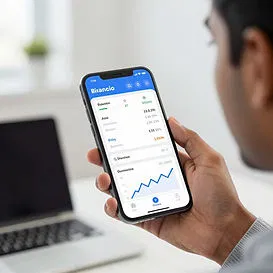
Step 3: Automate or Perish
If you wait until the end of the month to see what’s left over to save, the answer will always be $0.00. Your brain is a master at finding ways to spend "leftover" money.
The best way to save money is to make sure you never see it in the first place. This is where automation becomes your best friend.
The Split Deposit: Ask your HR department or use your payroll portal to send $25 or $50 of every paycheck directly to a separate savings account. If it never hits your checking account, you won’t miss it.
The Round-Up: Many modern banking tools offer round-up features. You buy a coffee for $4.50, the bank rounds it to $5.00, and puts $0.50 in your savings. It’s "painless" because it feels like change, but over a year, it’s a car repair.
Step 4: Side Hustle Stacking
If your budget is already tighter than a pair of jeans from middle school, you don't need to cut more: you need to earn more. We call this "Side Hustle Stacking."
The trick here is the Rule of Purpose: Any money earned from a side gig does not exist for daily spending. It goes 100% into the emergency fund. Whether it's selling old clothes, freelance writing, or dog walking, that income is your "Emergency Express" lane. For more on this, check out our wealth-building strategies.

Step 5: High-Yield Everything
Don’t let your emergency fund sit in a standard big-bank savings account earning 0.01% interest. That’s basically letting the bank rob you in slow motion.
Put your fund in a High-Yield Savings Account (HYSA). In 2026, there are plenty of options that pay significantly more than the "traditional" banks. This is passive growth. Your money is making babies while you sleep.
Storing your money in a smart place is part of mastering money. It ensures that even while you're adding $50 a month, the bank is adding a few extra bucks just for the privilege of holding it.
The Truth: It’s Not About the Money, It’s About the Peace
Here is the truth that no one tells you: An emergency fund isn't just a pile of cash. It’s an "Anti-Anxiety Fund."
When you have a cushion, you stop living in fear of the "Check Engine" light. You stop sweating when your boss calls an unscheduled meeting. You have options.
Most people use their credit cards as their emergency fund. That’s not a plan; that’s a trap. Every time you swipe for an emergency, you’re paying the bank 20-30% interest for the "luxury" of having a crisis. When you have your own fund, the interest goes to you.

How an AI Can Fast-Track This For You
You might be thinking, "Penny, this sounds great, but I don't know where to start." That’s exactly why we built the Ask Mr. Dinero ChatGPT.
Instead of staring at a spreadsheet and crying (we’ve all been there), you can talk to a personal finance AI that actually understands your specific situation. It can help you:
Categorize your spending to find those hidden "leaks."
Calculate exactly how much you need based on your specific bills.
Recommend the best tools for your specific income level.
You don't have to guess. You can just ask.
Action Plan: Your 24-Hour Checklist
Stop reading and start doing. Here is your "Not Broke" emergency fund starter kit:
Open an HYSA: If you don't have a separate high-yield account, open one today. Keep it at a different bank than your checking account so you aren't tempted to "borrow" from it for a pizza. Check our top tool recommendations for the best places to park your cash.
Set the "Invisible" Transfer: Go into your bank app and set a recurring transfer of just $10 a week. You won't feel $10. That's two fancy coffees.
The "Windfall" Pact: Make a deal with yourself right now: The next time you get "found money": a tax refund, a birthday check from Grandma, or a bonus: at least 50% of it goes straight to the fund. No questions asked.
Audit Your Subscriptions: Find one monthly charge you don't use and kill it. Direct that specific amount to your new savings account.
Building a safety net doesn't mean your life has to stop. It just means that when life hits you with a curveball, you’ll have the glove ready to catch it.
Ready to find your hidden savings? Jump into the Ask Mr. Dinero AI assistant right now. Tell it your monthly income and your biggest expense, and let it build a custom "No-Stress" savings plan just for you.
Don't wait for the next emergency to wish you had started today. Go talk to Mr. Dinero.
Follow us for more real-talk finance:
Instagram:instagram.askmrdinero.me
X (Twitter):x.askmrdinero.me
Facebook:facebook.askmrdinero.me
Comments